Best Slow Cooker Beef Stew Ready in 8 Hours
Some dinners cook themselves while you get on with your day, and this slow cooker beef stew is one of them. You sear the beef in the morning, load everything into the slow cooker, and walk away. Eight hours later the house smells like Sunday dinner and the beef falls apart with a spoon. I make this beef stew when the weather turns cold and I want dinner sorted early.
The gravy turns thick and glossy, and the potatoes soak up the flavour from the stock. A hot pan, a slow cooker, and a little patience do the work. If you have never made beef stew in a slow cooker, start here. It uses everyday ingredients, it feeds six, and the leftovers taste even better the next day.
Why You’ll Love This Recipe
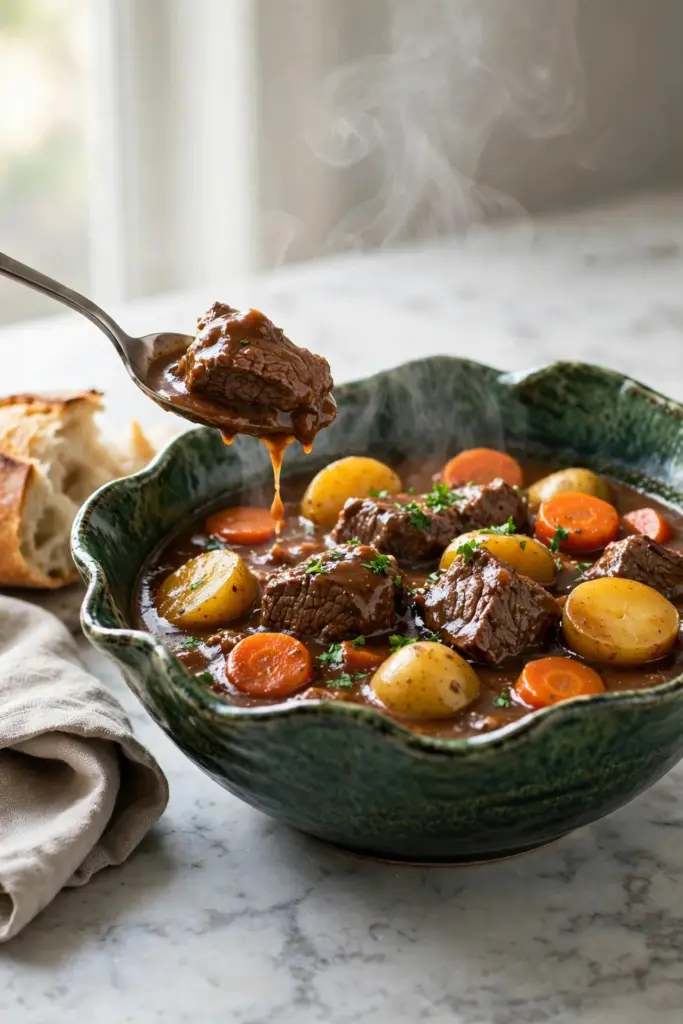
This beef stew earns its place in your regular rotation. The slow cooker does almost all the work, so hands-on time is about twenty minutes. The beef turns soft enough to cut with a spoon, and the gravy thickens with a quick flour slurry. It feeds six generously, which makes it a solid choice for family dinner. The ingredients cost little, and most are probably in your kitchen already. Carrots, potatoes, and celery hold up well over eight hours, so nothing turns to mush. It also freezes well, so a double batch gives you a second dinner.
Ingredients
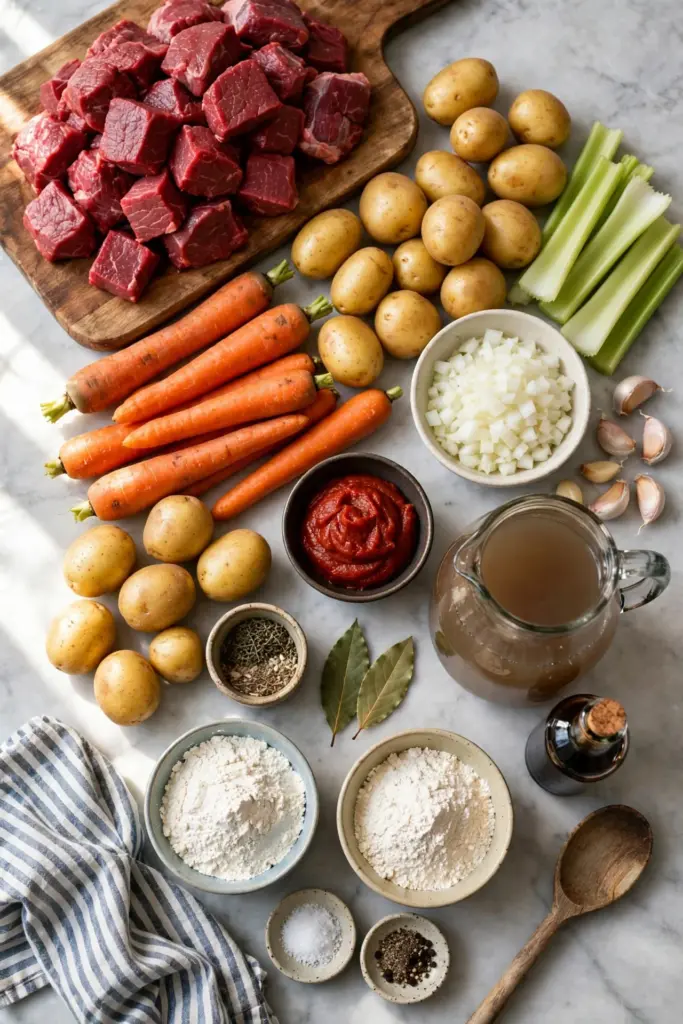
A few ingredient selection tips before you start:
- Pick beef chuck with a little marbling, which melts over eight hours and keeps the meat soft.
- Choose firm carrots and baby potatoes that hold their shape, since floury ones break down and cloud the gravy.
- Use low salt beef stock so you control the seasoning. A salty stock gets stronger as it reduces.
- Fresh thyme is nice, but dried thyme works well here because it has hours to release its flavour.
- Check your Worcestershire sauce label for gluten if you cook for someone with an allergy.
Tip: Buy the beef in one piece and cut it yourself, so the chunks stay big and even. Small, uneven pieces overcook and dry out.
| Amount | Unit | Ingredient Name | Notes |
|---|---|---|---|
| For the Beef | |||
| 900 | g | Beef chuck | Cut into 4 cm chunks |
| 2 | tbsp | Plain flour | For coating the beef |
| 1 | tsp | Fine sea salt | Plus more to taste at the end |
| 0.5 | tsp | Black pepper | Freshly ground if you have it |
| 2 | tbsp | Olive oil | For searing |
| For the Base | |||
| 1 | Large onion | Diced | |
| 3 | cloves | Garlic | Minced |
| 2 | tbsp | Tomato paste | Adds depth to the gravy |
| 500 | ml | Beef stock | Low salt if possible |
| 1 | tbsp | Worcestershire sauce | Adds savoury depth |
| 2 | Bay leaves | Remove before serving | |
| 1 | tsp | Dried thyme | Or 1 tbsp fresh thyme leaves |
| For the Vegetables | |||
| 4 | Medium carrots | Cut into thick rounds | |
| 600 | g | Baby potatoes | Halved, skins on |
| 2 | sticks | Celery | Sliced |
| To Finish | |||
| 2 | tbsp | Cornflour | Mixed with 3 tbsp cold water |
Equipment
You need a slow cooker that holds at least 5 litres, so everything sits under the stock in one layer. A large non-stick skillet works best for searing, because the beef releases easily. A wooden spoon, a sharp knife, and a small bowl cover the rest. If your slow cooker runs hot, check an hour early so the potatoes stay intact.
Instructions
Step 1: Season and Coat the Beef
Wondering if the flour coating is worth the extra minute? It is. The flour helps the beef brown and gives the gravy body later. Toss the beef chunks with the flour, salt, and black pepper until every piece has a light, even coat. Wash your hands after handling the raw beef, and keep it away from the vegetables until it is seared. Beef is safe once it reaches 63C (145F), and this stew cooks far past that point.
Step 2: Sear the Beef in Batches
Why sear the beef first? The browned edges add the deep, savoury flavour that makes this beef stew taste like it cooked all day. Heat the olive oil in a large non-stick skillet over medium high heat until it shimmers. Sear the beef in two batches, turning each piece until every side is dark brown, about 3 to 4 minutes per batch. Do not crowd the pan, or the beef steams instead of browning. The beef should look deeply browned outside and still pink inside when it goes into the slow cooker.
Chef’s Note: Leave the browned bits in the pan. The next step lifts them straight into the stew.
Step 3: Soften the Onion, Garlic, and Tomato Paste
Can you skip cooking the onion first? You can, but a quick fry makes a real difference. Lower the heat to medium and cook the onion in the same skillet for 4 to 5 minutes, until soft and golden at the edges. Stir in the garlic and tomato paste and cook for one more minute, until the paste darkens and smells sweet. Pour in a splash of stock, scrape up the browned bits, and tip the whole lot into the slow cooker.
Step 4: Load the Slow Cooker
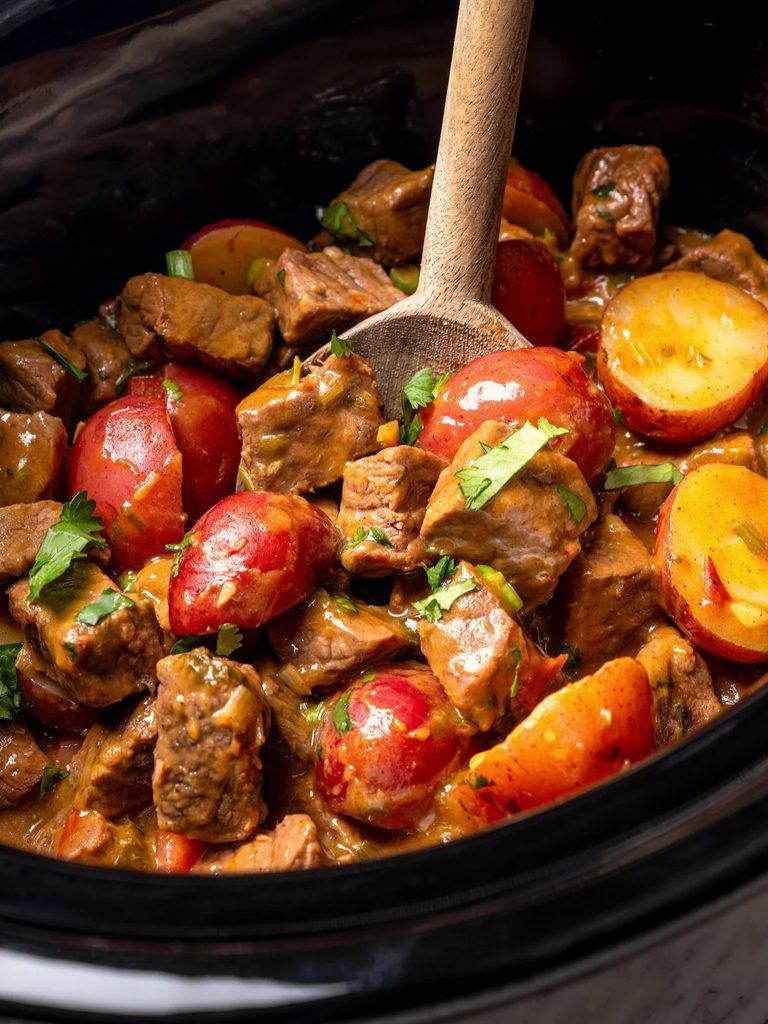
Does the order of the vegetables matter? Yes, a little. Put the carrots, potatoes, and celery around the beef so they sit under the stock and cook evenly. Pour in the rest of the stock and the Worcestershire sauce, tuck in the bay leaves, and sprinkle over the thyme. The liquid should just cover the meat and vegetables. Give everything one gentle stir, put the lid on, and set the slow cooker to low for 8 hours.
Chef’s Note: Resist lifting the lid to check. Every peek lets heat escape and adds cooking time.
Step 5: Cook Low and Slow
Is eight hours really needed? For beef chuck, yes. The long, gentle heat melts the tough fibres and turns them soft. Leave the slow cooker alone on low for the full 8 hours. The beef should shred under a fork and the carrots should stay tender but hold their shape. If your slow cooker runs hot, check at 7 hours so the potatoes do not collapse.
Step 6: Thicken the Gravy and Serve
Why is my gravy thin after eight hours? Slow cookers trap steam, so the liquid stays thinner than a pot on the stove. Mix the cornflour with 3 tablespoons of cold water until smooth, then stir the slurry into the stew. Put the lid back on and cook on high for 15 to 20 minutes, until the gravy turns glossy and coats the back of a spoon. Fish out the bay leaves, taste for salt, and serve the beef stew hot.
Chef’s Note: If the gravy still looks thin after 20 minutes, stir in one more teaspoon of cornflour mixed with cold water.
Tips and Tricks
My beef came out tough. What went wrong? Tough beef usually means the stew cooked on high, or the time was cut short. Beef chuck needs the full 8 hours on low. Keep the lid on and let the slow cooker do its work.
Can I use a different cut of beef? Yes. Braising steak works well, and brisket works too. Avoid lean cuts like sirloin, which dry out over eight hours.
How do I stop the potatoes going mushy? Use waxy baby potatoes and keep them halved, not diced. Small pieces break down fast. If your slow cooker runs hot, add the potatoes after 5 hours.
Can I make this beef stew ahead? Yes, and it tastes better the next day. Cool it fully, then keep it in the fridge in a sealed container.
Common Mistakes and Troubleshooting
Mistake: Searing all the beef at once. Cause: A crowded pan drops the heat, so the beef steams instead of browning. Fix: Sear in two batches with space between the pieces.
Mistake: Cooking on high to save time. Cause: High heat tightens the meat fibres before they have time to soften. Fix: Cook on low for the full 8 hours, and use high heat only for the last 20 minutes to thicken the gravy.
Mistake: Adding the cornflour dry to the stew. Cause: Dry cornflour clumps the moment it hits hot liquid. Fix: Mix it with cold water first, then stir the slurry in slowly.
Mistake: Lifting the lid to check on the stew. Cause: Every peek lets heat escape, and the slow cooker needs time to recover. Fix: Leave the lid on until the last hour, then check once.
Variations
Beef Stew with Mushrooms
Add 200 g of sliced chestnut mushrooms for the last hour of cooking. They soak up the gravy and add an earthy note. Fry them in a little butter first for a deeper flavour. This version of beef stew works well with mashed potatoes, since the mushrooms add extra sauce to spoon over.
Spicy Beef Stew
Add 1 teaspoon of smoked paprika and half a teaspoon of chilli flakes with the thyme. The heat stays gentle, and the paprika adds a smoky note. Serve it with plain rice or bread to balance the spice. Skip the chilli flakes if children are eating.
Beef Stew with Parsnips and Swede
Swap half the potatoes for 300 g of parsnips and 300 g of swede. Both hold up over eight hours and add a sweet note. Cut them a little larger than the potatoes so they cook at the same pace.
Beef Stew with Dumplings
For the last 30 minutes, turn the slow cooker to high and drop spoonfuls of dumpling dough on top. Use 150 g of self raising flour, 75 g of shredded beef suet, a pinch of salt, and about 5 tablespoons of cold water, mixed just until it holds together. Put the lid back on until the dumplings look puffed and cooked through.
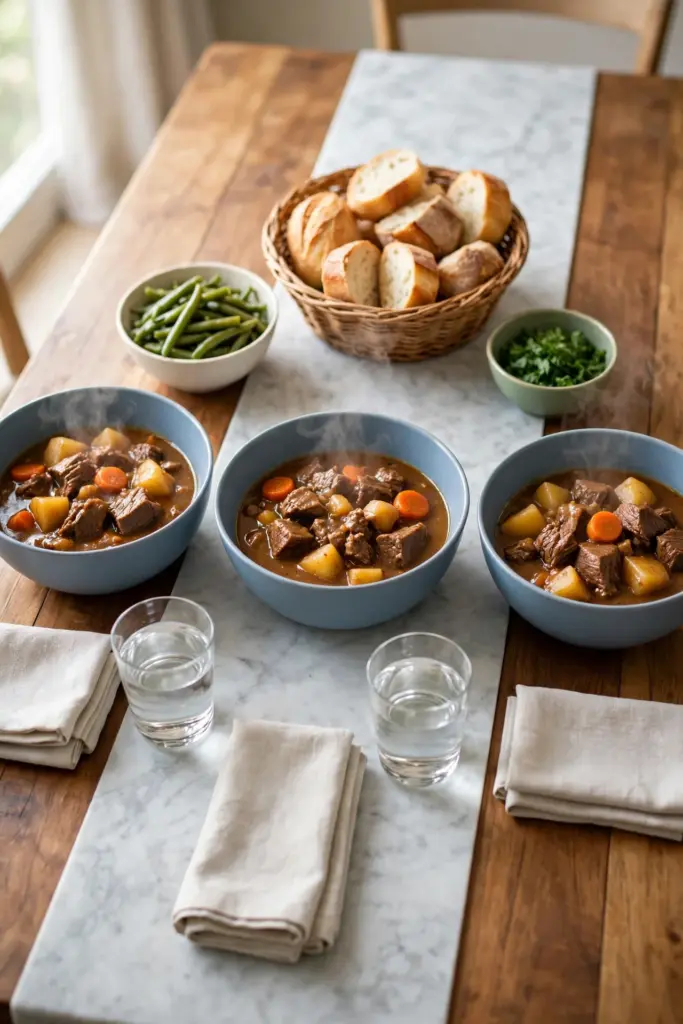
Serving Suggestions
With Crusty Bread
A thick slice of crusty bread belongs next to this beef stew. It soaks up the gravy and turns a simple bowl into a full meal. Warm it in the oven first, so it arrives hot.
Over Buttery Mashed Potatoes
Spoon the beef stew over mashed potatoes made with butter and a splash of milk. The mash catches the gravy and stretches the meal.
With Steamed Green Beans
Steamed green beans add colour and a fresh bite. Cook them for 4 to 5 minutes until bright green and just tender, then toss with a little butter and salt.
With Plain Boiled Rice
Plain boiled rice works well when you want the gravy to shine. The rice soaks up the sauce and feels lighter. Cook the rice while the stew thickens, so both reach the table hot.
Storage Instructions
Fridge Storage
Cool the beef stew fully, then keep it sealed in the fridge for 3 to 4 days. The flavour improves overnight.
Reheating
Reheat gently in a pan over low heat until it bubbles all the way through. Add a splash of water or stock if the gravy looks too thick.
Freezing
Freeze the beef stew in portions for up to 3 months. Leave the potatoes out, since they turn grainy after thawing.
Make-Ahead Tips
Cook the beef stew a day ahead and keep it in the fridge overnight. Make the slurry fresh on the day you serve it, so the gravy thickens properly.
Allergen Information
The plain flour coating and cornflour slurry both contain gluten, and the celery sticks are a named allergen. For a gluten free version, coat the beef in a gluten free flour blend and thicken with the same blend. Leave the celery out and add an extra carrot if you need to avoid it. This recipe contains gluten and celery. Always check individual ingredient labels, as formulations vary by brand. This article does not constitute allergy-safe certification.
Prep Time : 20 minutes
Cook Time : 480 minutes
Total Time: 500 minutes
Nutrition Information (per serving, estimates only):
| Nutrient | Amount |
|---|---|
| Calories | 380 to 440 kcal |
| Protein | 32 to 38g |
| Carbs | 28 to 34g |
| Fat | 14 to 18g |
| Fiber | 4 to 6g |
| Sugar | 6 to 9g |
| Sodium | 520 to 640mg |
Nutrition values are estimates only. Actual figures will vary depending on the specific brands, cuts, and quantities you use.
Frequently Asked Questions
Can I cook this beef stew on high instead of low?
Yes, you can cook this beef stew on high for 4 to 5 hours, but the beef will not be quite as soft. Low and slow gives the best result with beef chuck. If you are short on time, high works, but check the beef at 4 hours.
Can I freeze beef stew?
Yes, beef stew freezes well for up to 3 months in sealed containers. Cool it fully first, then freeze in portions. Thaw overnight in the fridge and reheat gently in a pan.
What is the best cut of beef for beef stew?
Beef chuck is the best cut for beef stew. It has enough fat and connective tissue to stay moist over a long cook, and it turns soft enough to cut with a spoon.
Why is my beef stew gravy thin?
Slow cookers trap steam, so the liquid stays thinner than a pot on the stove. The cornflour slurry at the end fixes this in 15 to 20 minutes on high.
Can I add the vegetables later?
Yes. If you like your vegetables firmer, add the potatoes and carrots after 5 hours instead of at the start. They will still cook through and hold their shape better.
Final Thoughts
This beef stew is the dinner I reach for when the days get short and cold. It asks for twenty minutes in the morning and gives back a full, rich meal by evening. The leftovers carry me through the week. Make it once, and you will find your own small changes to it.
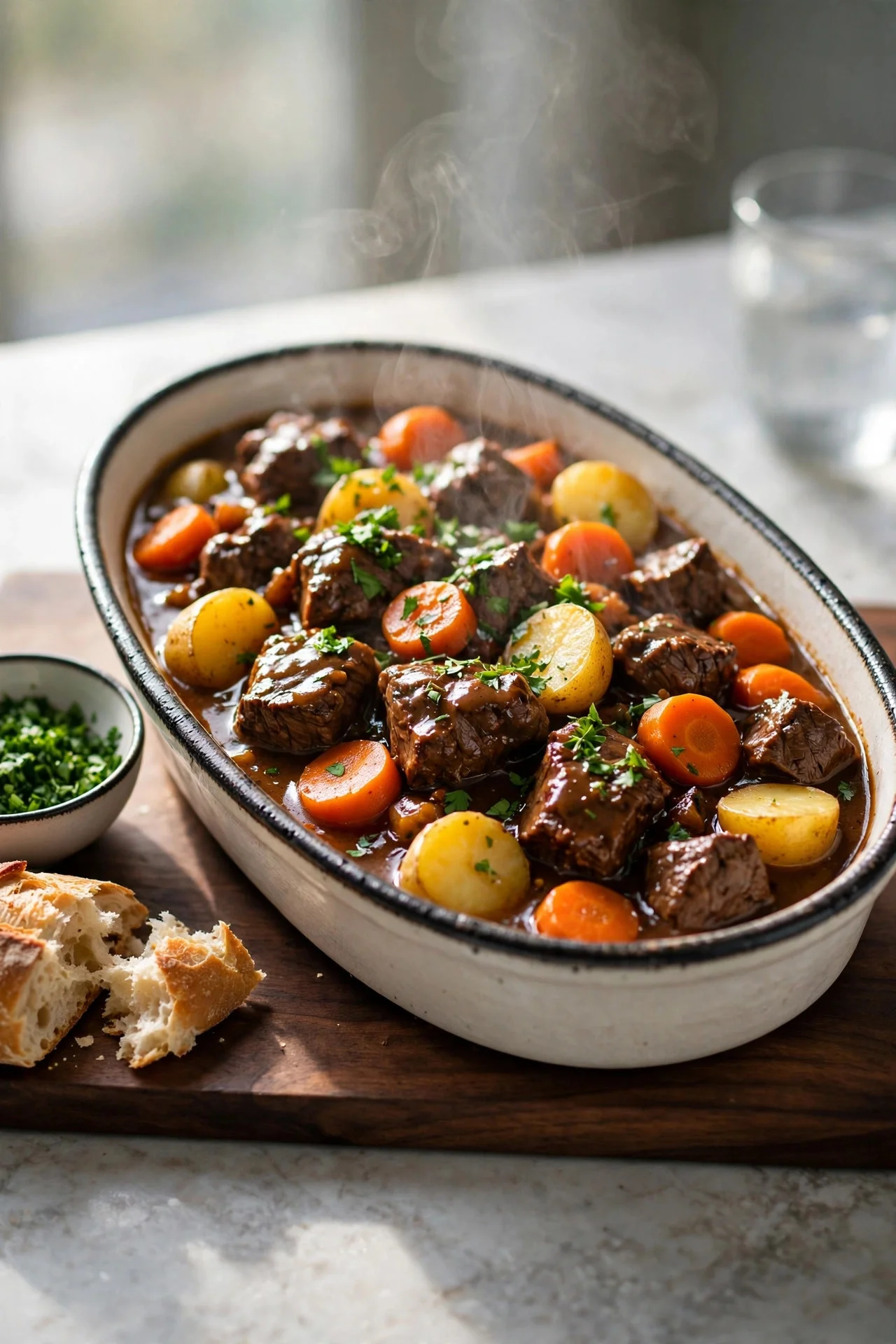
Best Slow Cooker Beef Stew
Ingredients
Equipment
Method
- Toss the beef chunks with the flour, salt, and black pepper until every piece has a light, even coat. Wash your hands after handling the raw beef, and keep it away from the vegetables until it is seared. Beef is safe once it reaches 63C (145F), and this stew cooks far past that point.
- Heat the olive oil in a large non-stick skillet over medium high heat until it shimmers. Sear the beef in two batches, turning each piece until every side is dark brown, about 3 to 4 minutes per batch. Do not crowd the pan, or the beef steams instead of browning. The beef should look deeply browned outside and still pink inside when it goes into the slow cooker.
- Lower the heat to medium and cook the onion in the same skillet for 4 to 5 minutes, until soft and golden at the edges. Stir in the garlic and tomato paste and cook for one more minute, until the paste darkens and smells sweet. Pour in a splash of stock, scrape up the browned bits, and tip the whole lot into the slow cooker.
- Put the carrots, potatoes, and celery around the beef so they sit under the stock and cook evenly. Pour in the rest of the stock and the Worcestershire sauce, tuck in the bay leaves, and sprinkle over the thyme. The liquid should just cover the meat and vegetables. Give everything one gentle stir, put the lid on, and set the slow cooker to low for 8 hours.
- Leave the slow cooker alone on low for the full 8 hours. The beef should shred under a fork and the carrots should stay tender but hold their shape. If your slow cooker runs hot, check at 7 hours so the potatoes do not collapse.
- Mix the cornflour with 3 tablespoons of cold water until smooth, then stir the slurry into the stew. Put the lid back on and cook on high for 15 to 20 minutes, until the gravy turns glossy and coats the back of a spoon. Fish out the bay leaves, taste for salt, and serve the beef stew hot.